





CoreWeave has become a focal point for investors questioning whether the AI boom can generate returns sufficient to justify the cost of building it. The cloud computing provider is expanding rapidly, but its investment in chips, data centers and power capacity requires substantial upfront capital, much of it financed through borrowing.
Investor concerns intensified in mid-October as CoreWeave’s shares and bonds came under pressure. The selloff reflects broader doubts about AI valuations, financing costs and whether infrastructure spending will produce sustainable profits.
The outlook is not uniformly negative. Goldman Sachs upgraded CoreWeave to Buy on October 19, arguing that constrained computing supply could help the company generate more revenue from its capacity. The bank nevertheless cut its price target from $139 to $106.
Key Highlights
- Financing pressure: CoreWeave’s debt and lease liabilities were reported at more than $51 billion, compared with $5.54 billion in cash.
- Rapid growth: Second-quarter fiscal 2026 revenue reached $2.575 billion, up from $1.212 billion a year earlier.
- Large backlog: CoreWeave reported $104.2 billion in revenue backlog at the end of June and announced more than $25 billion in additional customer commitments early in the third quarter.
- Divided outlook: Investors are concerned about financing and delivery costs, while Goldman Sachs sees potential upside from scarce computing capacity.
What Is CoreWeave?
CoreWeave is a US cloud infrastructure company that supplies computing capacity for AI workloads. Its systems use graphics processing units (GPUs) and related infrastructure to train and run AI models.
Unlike software companies that can expand without building comparable physical infrastructure, CoreWeave must invest in chips, data centers, networking equipment and electricity before it can deliver capacity to customers. Revenue arrives over time, making the company sensitive to financing costs and construction delays.
Why CoreWeave’s Stock and Bonds Came Under Pressure
In mid-October, investors questioned the scale and sustainability of AI infrastructure spending. Concerns included data center delays, constraints on power and components, and the risk that higher borrowing costs could weaken returns.
Reuters reported that CoreWeave shares lost more than a quarter of their value over five trading sessions. Yields on some unsecured bonds rose to around 15%, with certain yields moving above 16%. The cost of insuring the company’s debt against default also surged.

Rising bond yields signal that investors demand more compensation for taking on credit risk. They do not mean that all of CoreWeave’s borrowing carries the same rate or that default is inevitable. But more expensive or harder-to-obtain financing could make it more difficult for the company to complete projects and meet its obligations, even if customer demand remains strong.
The Numbers Behind the Concern
CoreWeave’s second-quarter fiscal 2026 results show rapid growth alongside continued financial pressure:
- Revenue: $2.575 billion, compared with $1.212 billion a year earlier.
- Adjusted EBITDA: About $1.51 billion.
- Net loss: $626 million.
- Net interest expense: $640 million, up from $267 million a year earlier.
- Revenue backlog: $104.2 billion as of June 30.
Revenue more than doubled year over year, but CoreWeave still reported a net loss and substantially higher interest expense. Adjusted EBITDA measures operating performance before interest, taxes, depreciation, amortization and certain adjustments; it is not the same as net income or free cash flow.
The $104.2 billion backlog represents revenue CoreWeave expects to recognize from contracted business, not cash on hand or guaranteed profit. The company must still deliver the contracted capacity and cover the associated costs.
The contrast explains investor concerns: CoreWeave’s revenue and adjusted EBITDA are growing, but net losses, rising interest costs and heavy infrastructure spending raise questions about whether it can turn strong demand into sustainable cash flow.
Why Goldman Sachs Upgraded the Stock
Goldman Sachs upgraded CoreWeave from Neutral to Buy on October 19, while lowering its price target from $139 to $106. Analyst Gabriela Borges argued that investors may be overstating the company’s financing risks.
One distinction is that CoreWeave uses asset-backed financing tied to GPUs and infrastructure, as well as unsecured bonds. Goldman argued that yields on unsecured debt may not fully reflect the cost of all the company’s borrowing, since asset-backed financing can have different terms. The bank expected blended borrowing costs to rise by roughly one to two percentage points, rather than move in line with the sharp increase in some unsecured bond yields.
Goldman’s bullish case also depends on constrained computing supply. If demand remains strong, CoreWeave could generate more annual recurring revenue per megawatt of capacity. The bank also pointed to reported service price increases of 25% in July and a further 10% in October. Higher prices could improve returns if customers continue to accept them.
The upgrade is not a guarantee of recovery. The outcome depends on demand, financing costs and the returns CoreWeave earns from its infrastructure.
The Financing Risks Go Beyond Bond Yields
Asset-backed loans can provide capital on different terms from unsecured debt, but they still have to be repaid. The assets securing them could also become less valuable if demand, chip economics or technology requirements change.
Barchart reported on October 20 that CoreWeave’s debt and lease liabilities exceeded $51 billion, against $5.52 billion in cash. Market-based estimates of default risk have also risen sharply. Such estimates reflect current bond and credit-insurance prices; they are not predictions that the company will definitely default.
The central question is whether CoreWeave can finance its expansion at a cost that leaves attractive returns. Higher borrowing costs could weaken project economics unless revenue, pricing or operating efficiency improves.
How CoreWeave Became a Test of the AI Boom
CoreWeave’s selloff reflects a wider question: whether the returns from AI infrastructure will justify the sums being invested.
Large technology companies are spending heavily on data centers, chips and related infrastructure. Specialist cloud providers, often called neoclouds, are also expanding to serve AI developers and other customers. Many must finance capacity before receiving the full revenue from customer contracts.
Morgan Stanley estimates that hyperscalers and AI cloud providers will spend about $980 billion on AI infrastructure in 2026, rising to $1.58 trillion in 2027 and $1.8 trillion in 2028. The forecast highlights the scale of expected investment, but the returns depend on future demand, utilization and pricing.
Investors are also scrutinizing relationships between chip suppliers, cloud providers and AI companies, including investments and commitments to buy computing services from one another. These arrangements can support growth but also create interconnected financial exposure.
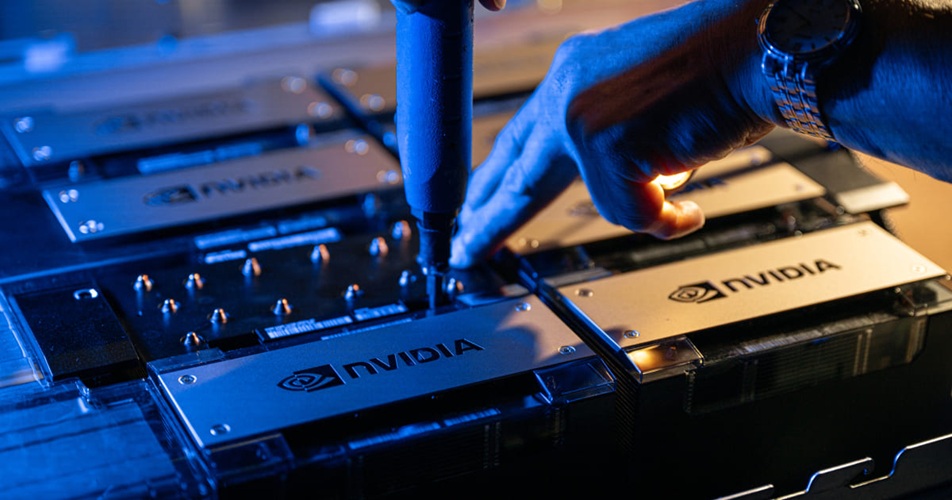
Nvidia’s relationship with CoreWeave illustrates how closely linked the AI infrastructure market has become. Reuters reported that Nvidia agreed to buy CoreWeave’s computing capacity that the company could not sell to other customers, under an arrangement running through April 2032. The agreement provides CoreWeave with a potential backstop for some of its capacity, but it also highlights how companies across the AI supply chain are financially interconnected.
CoreWeave is not the only company facing scrutiny. The selloff does not prove that AI demand is weakening, but it shows that investors are paying closer attention to which companies can turn that demand into sustainable profits.
Strong AI Demand Does Not Guarantee Strong Returns
CoreWeave must bring data centers online on schedule, secure sufficient power and generate enough revenue to cover operating costs, interest and continued expansion. Delays, higher financing costs or lower utilization could weaken returns.
The opposite is also possible. If demand continues to outstrip supply and CoreWeave can raise prices while improving utilization, its infrastructure could generate stronger returns than investors expect. That is central to Goldman Sachs’ bullish case.
The question is whether CoreWeave can turn strong demand into sustainable profits while managing the cost of expansion.
What to Watch Next
- Financing costs: Whether CoreWeave can secure capital on terms that preserve project returns.
- Cash flow and interest expense: Whether revenue growth translates into stronger cash generation.
- Capacity and execution: Whether new data centers come online on schedule and have sufficient power.
- Demand and pricing: Whether customers follow through on commitments and accept higher prices.
- Industry spending: Whether major technology companies and AI developers maintain their infrastructure investment plans.
Is CoreWeave a Warning Sign for the AI Boom?
CoreWeave’s selloff highlights a risk in the AI infrastructure race: strong demand does not remove the financial pressure of building capacity with borrowed money.
The company has rapid revenue growth, a substantial backlog and an opportunity to benefit from constrained computing supply. But its net losses, rising interest expense and large financial commitments have left investors questioning whether growth will deliver lasting returns.
The selloff does not prove that the AI boom is ending, just as Goldman Sachs’ upgrade does not settle the concerns. It shows that investors are weighing not only how much computing power the industry needs, but who can afford to build it and whether the returns will justify the cost.


