





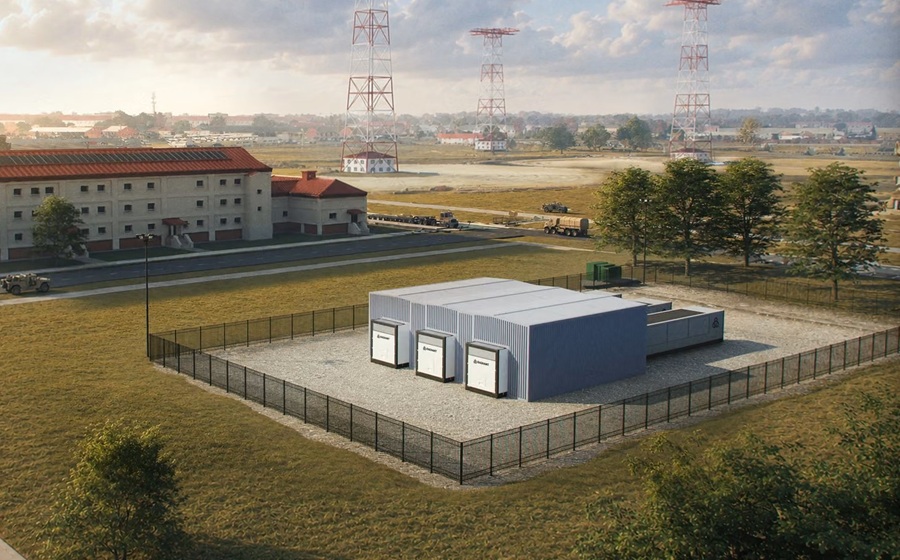
The U.S. Army is turning military bases into proving grounds for a new generation of nuclear power, committing up to $2.2 billion to five companies tasked with developing and operating microreactors at installations across the country.
The awards, announced August 26 under the Army’s Janus Program, mark one of the most ambitious U.S. government efforts yet to move advanced nuclear reactors from demonstrations into routine operation. The Army expects private investment to add billions of dollars to the effort and says more than 20 microreactors could eventually operate across Department of War installations.
The program is driven by a simple military concern: a base that depends entirely on the civilian grid can lose a critical source of power when the grid is attacked, disrupted or cut off. The Army wants nuclear systems that can keep essential operations running for years, while remaining connected to the commercial grid during normal conditions.
The first five sites are Fort Bragg in North Carolina, Fort Campbell in Kentucky, Fort Hood in Texas, Fort Benning in Georgia and Fort Drum in New York.
Key Highlights
- Five companies were selected for the first Janus projects.
- The Army could provide up to $2.2 billion from fiscal years 2027 through 2031.
- Initial sites are in North Carolina, Kentucky, Texas, Georgia and New York.
- The reactors are expected to produce roughly 1 MW to 20 MW, depending on the design.
- The systems will remain connected to commercial grids but are intended to provide power during outages.
- Reactors will be contractor-owned and operated, with payments tied to technical milestones.
- The Army is targeting its first operational reactor by September 2028.
- The program is also intended to help the companies eventually sell reactors to commercial customers.
Five Companies, Five Bases
The Army selected:
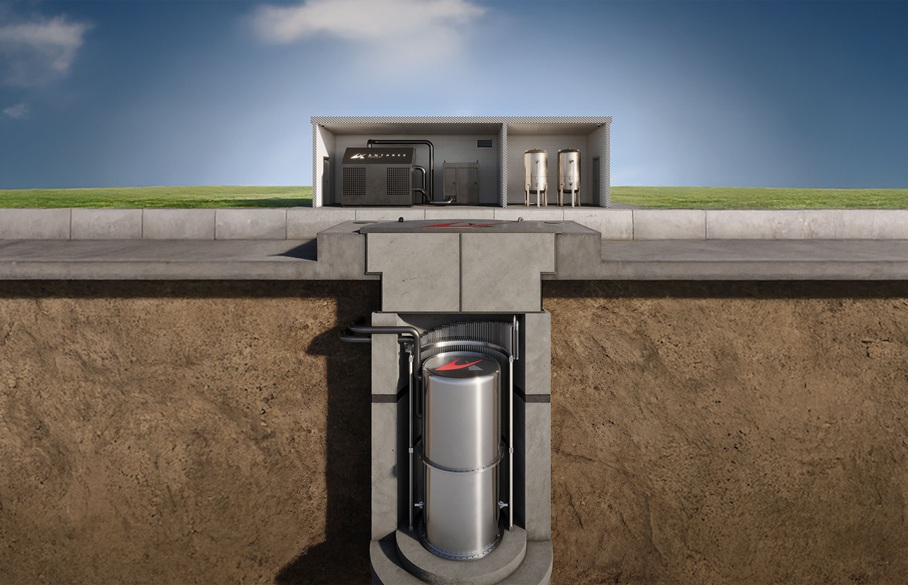
- Antares Nuclear at Fort Bragg, North Carolina
- BWXT Advanced Technologies at Fort Campbell, Kentucky
- General Atomics Electromagnetic Systems at Fort Hood, Texas
- Radiant Industries at Fort Benning, Georgia
- Westinghouse Government Services at Fort Drum, New York
Antares and Radiant are slated for three reactors each at their respective bases. BWXT, General Atomics and Westinghouse each have an initial reactor project.
The Army did not disclose the value of each award.
Radiant separately said its agreement is worth $750 million for 15 Kaleidos microreactors, each designed to produce 1 MW. The company is testing the reactors at Idaho National Laboratory’s DOME facility.
General Atomics’ Tactical Energy System, or GA-TES, has a baseline output of about 5 MW and can scale to approximately 20 MW.
The Reactors are Backup Power, Not Grid Replacements
The Army does not plan to disconnect the installations from commercial electricity.
Instead, the microreactors will operate alongside the grid and provide another source of power if grid service is disrupted. Officials said the initial systems are not intended to power entire bases.
The military’s interest comes from growing concerns about attacks or failures affecting electrical infrastructure and the difficulty of transporting diesel fuel to remote locations.
“Unlike in prior conflicts, we now know that our domestic electric grid is potentially at risk in a conflict,” Jeff Waksman, principal deputy assistant secretary of the Army for Installations, Energy and Environment, said during a media briefing.
The Army also sees potential applications at remote locations such as Alaska and U.S. Pacific islands, where fuel deliveries and grid connections can be less reliable.
General Atomics is targeting 5 MW to 20 MW
General Atomics’ GA-TES illustrates the range of technology being considered.
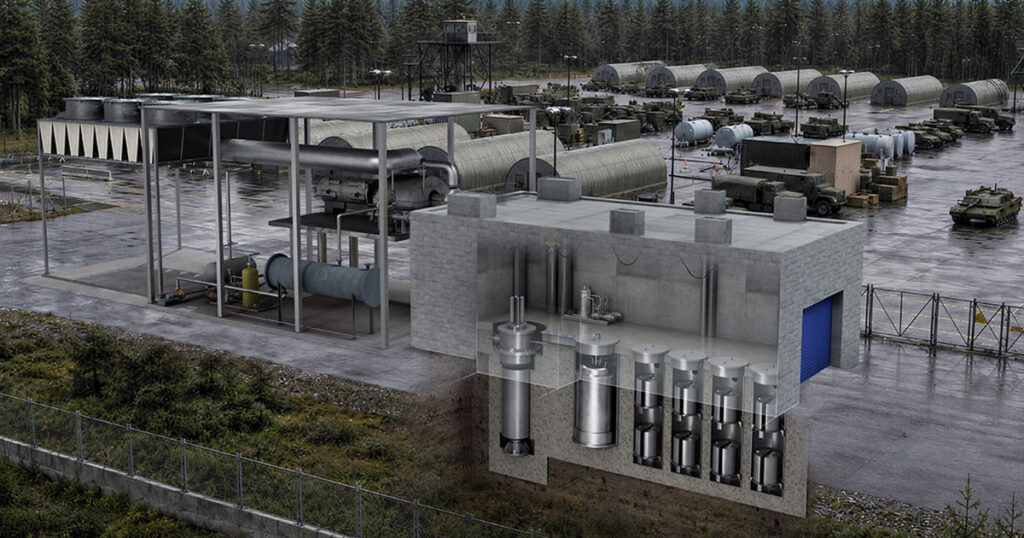
The system is a liquid-metal-cooled reactor with a 5-MW baseline output and a design that can scale to approximately 20 MW. General Atomics says it has a 40-year design life and can be transported by truck or rail.
Its primary cooling system uses natural circulation rather than pumps.
“Passive safety and operational simplicity are fundamental to our Tactical Energy System design. Self-protecting UZrH fuel and pump-free natural-circulation cooling reduce reliance on active systems and operator intervention, while provide flexibility to meet evolving defense energy requirements,” Christina Back, Ph.D., vice president of GA-EMS Nuclear Technologies and Materials, said.
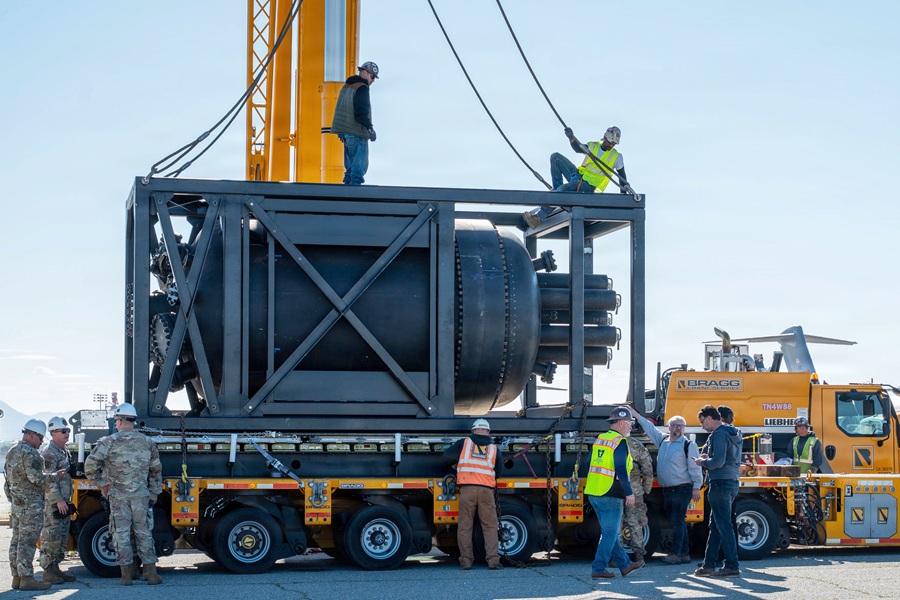
Fort Hood will be used for development, testing and site-planning work under the Janus agreement.
Reactor Safety and Nuclear Fuel
The Army says the selected Generation IV microreactors are designed with passive safety features that allow them to shut down without relying on external power or diesel generators.
Waksman said none of the five planned reactors will use highly enriched uranium, sometimes described as weapons-grade uranium.
The projects are expected to use high-assay low-enriched uranium (HALEU). The Energy Department is expected to initially provide fuel by downblending existing stockpiles.
That supply could become a constraint if the Army reaches its goal of deploying more than 20 reactors. Waksman said the available U.S. HALEU supply is limited, although the Energy Department has committed about $2.7 billion to expand domestic enrichment capacity.
The reactors are also expected to use encapsulated nuclear fuel. Waksman said tristructural isotropic, or TRISO, fuel is likely because it is already qualified and in production.
The Army is also working with the Energy Department on radioactive waste disposal. Officials said nuclear waste will not be stored on military bases indefinitely.
Under a planned Department of War-wide waste agreement, spent fuel and other radiological material would have to be removed from a site within two years after a reactor shuts down.
The reactors will be regulated by the Army rather than the Nuclear Regulatory Commission. Army officials say they are working with the DOE and NRC to bring the military regulatory process as close as possible to commercial standards, with the aim of making later commercial licensing easier.
Janus Could Become a Commercial Nuclear Test Bed
The significance of Janus extends beyond military power.
Advanced nuclear developers have struggled to secure customers willing to finance and host their first commercial-scale systems. The Army is effectively becoming an early customer while shifting much of the construction and operating responsibility to private companies.
The program follows Project Pele, a Pentagon effort announced in 2022 to develop a transportable 1-MW-to-5-MW nuclear reactor, as well as the Energy Department’s advanced reactor demonstration efforts.
Three Janus participants, Antares, Radiant and Westinghouse, were also selected for microreactor work at Air Force installations.
If the first projects meet their technical and regulatory targets, the Army plans to expand deployments across other military services.
“The Janus Program is grabbing the baton from Project Pele and the [Department of Energy’s] Reactor Pilot Program,” Waksman said. “We are seeking not just reactors capable of turning on for a brief demonstration, but rather systems able to deliver power with high-capacity factors for years of operation.”
The immediate test is the first reactor. The Army wants one operating on a military installation by September 2028.
If that deadline is met, Janus could provide advanced nuclear companies with something the sector has lacked for years: an operating customer, a real deployment site and a path toward commercial reactors.


